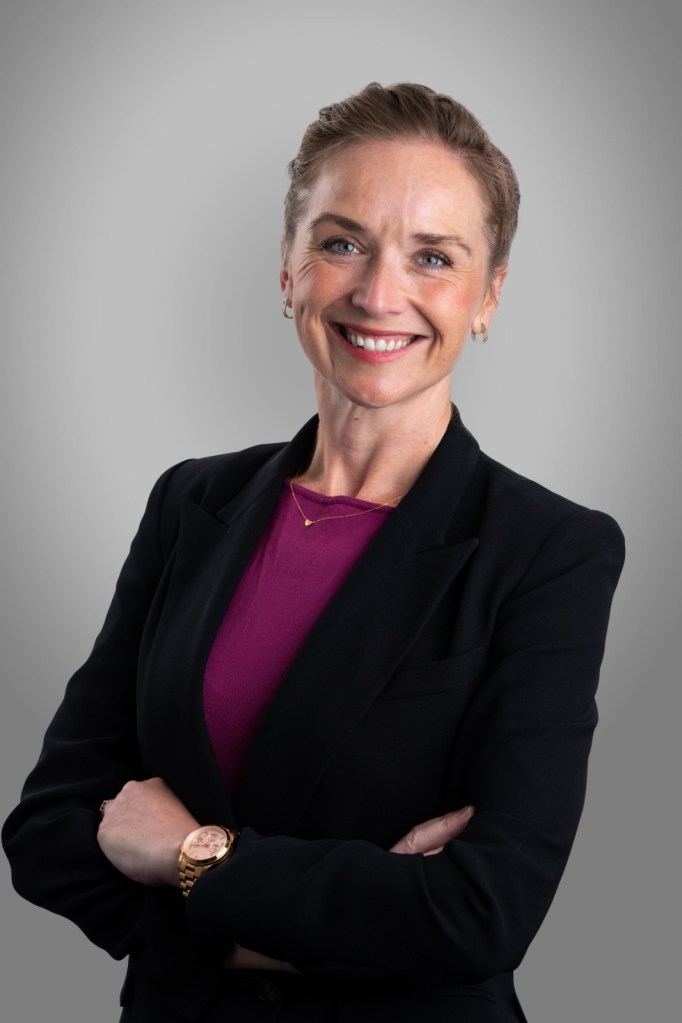
AAWAA brings to you ‘Local Action’, interviews with women getting it done across Australia. Today, Emma interviews Dr Megan Blake, barrister for the Lesbian Action Group and President of the newly established charity YAEL Women’s Defence Guild about her views on the fight for women’s sex-based protections and rights in Australia.
Throughout her career Megan has been involved in the application of human rights and international right standards. She has provided written submissions on various United Nations instruments, including for the Convention on the Elimination of All Forms of Discrimination against Women committee, the UN Special Rapporteur on Violence Against Women and Girls, and the Office of the Prosecutor, and been part of consultative panels with the Special Rapporteur, as appointed by the United Nations. She is on the team of the Lesbian Action Group in its intervention into the Giggle for Girls case before the Full Court of the Federal Court (judgment pending) and is junior counsel for the Lesbian Action Group, which appeared before Justice Moshinsky in the Federal Court on the 23 and 24 of February this year. Megan is working ensure the Sex Discrimination Act, state laws and international agreements protect the sex-based rights of women and girls.
Megan has been getting it done!
Do you consider yourself a feminist? You certainly have earned that title!
I’ve never really thought of myself as a feminist and I still don’t. It’s not because I have those objections to feminism that some women have. I think I always knew that people in society considered that women had less worth or competence, but I never looked through that lens at myself and so always recognised it as being nonsense.
I’m not sure if it was because of the way I was brought up or just my personality, but I’ve always found that questioning of the of the self and identity immensely boring. I’ve never been particularly interested in labels or identifying with something – there’s a type of navel-gazing you see in adolescents and teenagers, but it now seems to be extending all the way through adulthood, and we all need to worry about which labels we adopt for ourselves. It’s more that I have always been interested and naturally drawn to ideas and accuracy and that which can be proved by material reality, can be tested by empirical measurement and repeated experience. Collectively tested – not just in my experience. So, it never really occurred to me that being female physically should mean anything when it comes to human worth, intellectual capacity or emotional range. It just didn’t occur to me that there was a connection between those things. Obviously, I was subject to the same social forces that other women are. And I saw them as just social forces – which I think at the end of the day is the heart of feminism, separating out the conditioning forces and the overlayed definitions of what it means to be female or male from the material reality underneath it. Separating those social overlays from humanity of actual women and their worth as a person and their individual capacities and their emotional capacity.
In relation to those conditioning forces, I think a lot of the arguments of philosophical Marxism are absolutely spot on. I think the arguments of second wave feminism, Dworkin and Greer in particular, are absolutely correct. I do think we are shaped by our environment in ways that we are not aware of, and it is hard to step outside of that and look at ourselves objectively. However, I never had a moment of awakening, of “wait, my outside doesn’t define me,” if that makes sense, or a moment where I became so enraged at the injustices of the world that I felt called to do something about it.
But it is frustrating that people in the world are unfair and inaccurate. I like accuracy and fairness! As we get older, we see patterns of inaccuracies and patterns of unfairness, and we notice that it is common for people to be wrong in this particular way. I don’t consider my work as specifically “feminist” work, although if someone else wants to use that as a convenient descriptor I don’t care.
Yes, so, I am claiming you for feminism, Megan!
That’s absolutely fine!
We’re in a moment where I think language has been given too much power in some ways. Someone changing the label doesn’t change the work I do. My work is correcting, as much as I can, unfairness and inaccuracies. To change false narratives because I don’t like them and I think many of them affect women and girls. So, I do work to try and push those along as much as I am able.
I used to do more work for refugee and asylum seeker populations but I think, to be honest, I lost interest in that because, all of a sudden, it became a really popular area for the philanthropic sector to focus on, and you get two problems when that happens. So many people are working on the area and resources are being a poured into it that. They don’t need me. Maybe because it is an underdog thing that gets me fired up. Also, it means you end up fighting your own side for accuracy, because popularity adds its own layer of bullshit.
That does seem to be happening now…
Yes, that is also what worries me about the women’s movement at the moment. The more traction it gains, the more the movement gets its own layer of bullshit, and you start getting inaccuracies within your side and then we need to fight our own side. That is just terrible.
Prostitution and the exploitation of women for sex-based paid use in all its forms – that was my introduction into public animosity. It is a baptism by fire when I know I am doing something good and everyone hates me. But I don’t really care about that. The benefits of growing up as a weird kid being bullied, it does not bother me. At the end of the day if you hate me then it doesn’t matter. So TERFdom was not a massive shock for me… but it is strange to be fighting the “progressive” side sometimes.
So you went where you were needed to do the most good?
I’m not a superhero!
Well, yes, you went where you were going to do the most good and you didn’t care if you would be attacked!
I mean, when you die, what are you going to care more about? That people you didn’t know, people you didn’t care about or respect or love, said you were poo-poo pants? Who cares!
From the women of Australia Thank YOU!
Haha, thank you.
Just, before we move away from the question of feminism and progressive ideology in Australia at the moment, though: I do worry about the future of our political philosophy.
You do need a certain amount of hope and optimism to do good work – you need to believe that improvement is possible and change is possible. But, ideally, you can make changes in small steps, not change too much without checking the impact of the change along the way.
I’m not religious at all but I see higher purpose as personal philosophy “what is my life for at the end of the day”. That is the point of being here, and the point for me is to try and make good change and do good things. Which may sound Pollyanna, but I think it is important to have some kind of guiding philosophy. A lot of us on the progressive side are guided by that philosophy being hope-oriented in some way.
However, I do think that a lot of people doing the worst work in world do it from the belief that they are making the world better. The people in politics who push policies that we fundamentally disagree with and think are the most harmful – I believe they do think they are the good person doing the good thing.
I also worry that conservatism in its various form is a very material philosophy and that progressivism is a utopian philosophy. I think they both have their risks, but I think the big risk with progressivism and the utopian mentality is not respecting what is good in what you have, and perceiving the current state as bad simply because it exists. If you are working towards a utopian future there is a risk of saying that you need to remake the whole of society rather than separating the wheat from the chaff and knowing what to preserve and what to tweak along the way.
With utopianism – it can be completely impractical and have a thousand unintended consequences because you have an idealised future and you don’t know how it is going to work or what the logistics will be. When you get a little closer to it and you look around and you realise that all these other bad things came with it that were not anticipated…
It’s like an ecosystem, isn’t it?
Yes, that’s exactly what I am thinking. I think the small steps with testing is something the progressive side has lacked historically, which leaves it vulnerable. I love the marriage of empirical science with ideological vision, though, because that is the test of things. You have the idea, but you have to ask how it works in practice. History, at least, can give us hints about that before we get there.
When we examine gender identity, for example, we can see it has been pushed forward without proper testing of the impact of each change, and I am sure it has something to do with the fact that the entire ideology is based on utopian vision. It’s not my utopia, but for supporters it is. It is a utopian vision in that it says “I can make myself in my own image” (just grabbing from The Great Gatsby there). The image of myself that I have in my head can be real. In my view it is fundamentally adolescent and drives me bananas, but, these ideas are so untethered from reality. You can’t even begin to reality-test them, from origins that are castles in the air. They are built on nothing. That is the problem. So many movements are the continual pushing of something that has no value in the material world and isn’t tested against the material world.
Utopianism, I think, is how Marxism has been able to be corrupted, for example. Stalin wasn’t a communist. He was a fascist. Stalin was a communist about as much as Hitler was a socialist. At the end of they were both fascists and at the end of the day they exploited the philosophies they both claimed to stand for at the beginning, because they attached themselves to systems that existed as utopian philosophical ideas, and so they were able to use them for their own ends. I say that as a philosophical Marxist, but I call myself a philosophical Marxist because I appreciate the ideas, but I personally cannot connect the philosophy with the real world and work out how to implement all of it in practice. It’s not that I don’t agree I just don’t see how it works. It’s more just wishful thinking.
Gender ideology is wishful thinking (for many people) that has been adopted as reality and is being used by a whole range of people with different interests to push their own agendas. And there is no appreciation of the distinction between difference, and hierarchy of difference. They have to separate that out. For a long time in modern feminism there was a popular “solution” to inequality that there is no difference between women and men – that everything was just social conditioning – and I think that was because of a low tolerance for difference without hierarchy of difference. This shit comes back to bite us, though, and now we have a large chunk of the population that genuinely believes you can be whatever you teach yourself to be, whatever image of yourself is in your head.
Also, I don’t think the population is very intelligent. I think most people haven’t reached Piaget’s Formal Operational Thinking and cannot comprehend two truths at once and how one variable will impact another. It’s possible to realise women require sex-based rights and we can keep them while protecting rights of trans people.
I agree that is borne out in so many examples. I think it is similar to the identification stage in early childhood and object permanence. Little kids, once they figure out that they exist and you exist and you don’t have to literally be the same person, if you leave the room they think you suddenly cease to exist. They cannot understand that you are there but not there at the same time. We also have emotional splitting and borderline personality disorder – these things, it’s not that you are special, and no one else does it. Everyone does it to a certain extent! It is just, if you have one of these dysregulated personalities, you will do it to greater extent. But people still do it as a regular part of thinking about the world: things must be entirely good or bad, one or the other.
Take Shakespeare for example. He started writing at the end of the 1500s and during the late 1400s and 1500s society was very invested in character types. They believed certain characters existed and people had those character types – your soul had the character type that matched your station in life. For example, the king had the soul of a king, a maid had the soul of a maid. God put you in that position because that was what your soul and character naturally fit. So, it wasn’t an accident of birth. Shakespeare consistently broke character types and he had people be both strong and weak at the same time. He had Lady Macbeth being a loyal wife and serving her husband – but she did it by emasculating him and calling him less than a man. Is that is being supportive or bullying? Or both. Shakespeare did this with all of his plays and his sonnets and there was about 100 years of debate about that: was it sophisticated and nuanced, or wrong and unrealistic? Do people conform to type? Despite all the reality that people had around them, all the evidence of people in elevated positions doing stupid things (for example, priests), or low-born people displaying brilliance. So many people got it wrong and it was not unique to them. It still happens now. Cognitive ability is much more limited than we think – fundamentally, we are animals.
This links to what I said earlier about progressivism being predominately utopian, and it’s why, historically, I think progressivism worked best in opposition. Chasing from behind, and pushing for the little change that it could achieve. I think that in the last 15 years across the anglosphere, progressivism has become much more of the assumed correct dominant force. So, the “good” is here and it is progressive in this exact way; and the “bad” is the opponent, anything that disagrees, and it will always be evil and never right. Now it is such a dominant force we are seeing insidious institutional capture.
I still tutor a bit there are several independent schools around Melbourne. I’ve noticed, in the time since I started tutoring, that institutions are being captured. One of the year 12 tasks in VCE is to do a speech on a current topic in the media. It is taking something controversial that is being debated and but presenting one side. It has to be an issue that has been discussed in the media since October the previous year. A lot of schools have the tradition of saying: pick what you are interested in, and try and narrow down to one particular angle, then run it by your teacher to make sure it is not too controversial or inappropriate. The bar is set high. The last 5 years schools have become really controlling, though – especially those schools that present themselves as being tolerant. One of the schools actually gave students a set of six topics to choose from. The students could only choose from the list. And the topics were not worded as neutral but were worded as a specific point of view. One student had a different view, that was not opposed to the listed view but only slightly different, and was told to re write his plan and stick to the listed viewpoints.
Essentially, there is a risk with thinking only one side is “good” that governments and organisations can be given the power to produce people with a particular political viewpoint, or work to create a population that believes good people can only think the prescribed way.
So, let’s challenge, and keep testing ideas against reality.
YAEL Women’s Defence Guild
Megan Blake is also the President of the YAEL Women’s Defence Guild.
Named after Yael, a biblical heroine who strategically killed Sisera, the commander of an aggressor army, and protected her people when they would have been annihilated in battle, YAEL Women’s Defence Guild fills a much-needed gap in support for women fighting legal action before courts, tribunals, human rights commissions, and international rights bodies. YAEL Women’s Defence Guild provides financial support for women’s sex-based rights in law by hosting a fund that accepts donations and pools them to give grants of money to people involved in cases that affect women as a sex class, and their rights and protections under Australian law.
As a newly established charity it will need your support. We ask that you share YAEL around your circles and, if you can, please donate or become a member. Further information on contacting YAEL and its web address will be coming in winter.
